 |
|
 |
| This final scene alone, an eclectic montage of
themes and symbols, speaks to Kurosawa's gift - one common to all,
I argue, successful Japanese artists — for drawing from and weaving
together multiple aesthetic traditions.
|
||
| |
||

|
||
| RHAPSODY IN AUGUST, aka Hachigatsu no rapusodï Directed by AKIRO KUROSAWA Japan Shochiku Company, Ltd., Orion Classics; Courtesy Kinnevik Media Properties, Ltd., all rights reserved 1991 |
||
| The umbrella, alone, is
a particularly important and
 suggestive
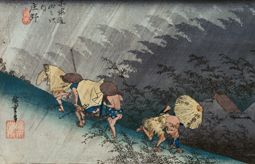
symbol. Umbrellas, even inverted umbrellas abound in Japanese works of art. The most famous, easily recognized, and ubiquitous umbrella is Hiroshige's (1787-1858) "Shirasame" (or, "White rain"), from the "Shonõ" station area, in his late Edo period series "53 Stations of the Tokaido Road". The image of the grandmother holding an umbrella and making her way in the storm alludes to or reminds us of this very important Japanese work of art. (Atomic Bomb Cinema, 295) The final scene, at least, of Hachigatsu no rapusodï owes much to the conclusion of the Kabuki Theater play Shunkan. To see the conclusion to this play, and for a more detailed analysis of the scene, go to Shunkan in the Moving Images section or click here . * A special note regarding the title of this film. In the USA there is some confusion about the Japanese title of this film. For more information click here |
||
 |
© 2001 ATOMIC BOMB CINEMA LTD. | |