REAL
MEDIA VIDEO STREAM

(Windows)
3033 Kb
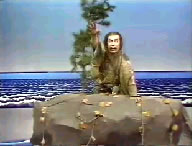
SHUNKAN
Performed by KICHIEMON NAKAMURA
Japan
Late 1990s |
Shunkan is a Medieval tale, supposedly
based on real characters, that was the subject of theater and literature.
The seminal playwright Chikamatsu Monzaemon used it for his
Bunraku
puppet theater in 1719, and this is the basis of modern
Shunkan
performances.
To compare this scene to the final scene of
Rhapsody
in August, see the Film Stills section.
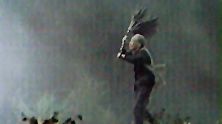 In
the final scene of Akira Kurosawa's 1991 film,
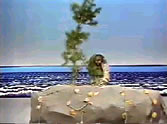 In
the climatic finale, Shunkan (Kichiemon Nakamura) is standing on a cliff
overlooking a bay, watching his family sail for home. Holding on to
the branch of a pine tree, for support, waving his final farewell, the
pine branch breaks off in his hand.
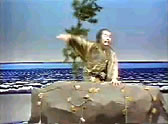 The
pine tree is a common symbol of long life. The branch breaking off in
Shunkan's hand symbolizes that Shunkan's own connection to life is broken,
and he is making his way into the next world. The final scene, at least,
of

