 |
|
 |
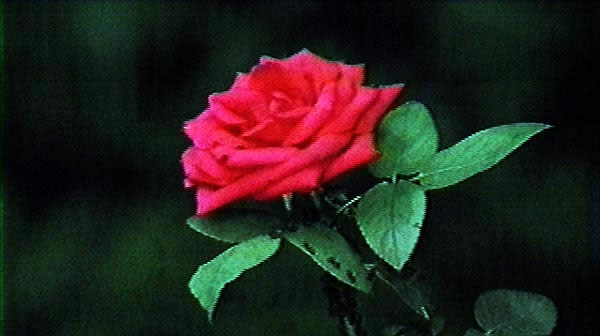
| The rose's color is noteworthy because the indigenous
wild rose is white; although enigmatic, the red rose suggests, at
least, that some elements of the West have taken root in Japan (Atomic
Bomb Cinema, 295)
|
||
| |
||
|
||
| RHAPSODY IN AUGUST, aka Hachigatsu no rapusodï Directed by AKIRO KUROSAWA Japan Shochiku Company, Ltd., Orion Classics; Courtesy Kinnevik Media Properties, Ltd., all rights reserved 1991 |
||
| This is not the only scene
with a rose. Throughout the film, Nobara,
or The Wild Rose,
a Schubert composition based on a Goethe poem, is played or sung,
including in the concluding shot.
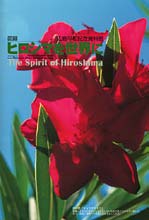
Kurosawa's use of the rose, here, is highly ambiguous, and it is difficult to identify a precedent meaning. One possibility is that the rose's red is similar to the red of the City Flower of Hiroshima, the kyochikuto or oleander. According to one publication, The Spirit of Hiroshima: An Introduction to the Atomic Bomb Tragedy by the Hiroshima Peace Memorial Museum (2001), it was widely, and erroneously, believed that nothing would grow in the burnt ground of Hiroshima for seventy-five years; the oleander was the first to blossom, and it gave "hope and light to the citizens of Hiroshima." * A special note regarding the title of this film. In the USA there is some confusion about the Japanese title of this film. For more information click here |
||
 |
© 2001 ATOMIC BOMB CINEMA LTD. | |