 |
|
 |
|||
| Why does everyone think that Japan's kaiju and
science fiction films are so "bad"? No one, not even the
Japanese writers, has been able to offer an aesthetic understanding
of these films that contextualizes them within Japanese expressive
traditions. But, for the first time a book,
Atomic Bomb Cinema, offers just such an explanation.
|
|||||
| |
|||||
 |
|||||
|
|
|||||
 In
this still, Gojira appears to be attacking the Diet, Japan's parliament.
The very depiction of Gojira, both serious and laughable in its exaggeration
comes straight from Japanese aesthetic tradition. That is, from what
art historian Nobuo Tsuji calls "
the 'pictorial fallacy' (esoragoto)." To paraphrase Tsuji, like the 12th century Jigoku zoshi or Hell Scroll, this image of Gojira simultaneously delights and terrifies (Atomic Bomb Cinema, 285-90). To better understand these images and Japanese aesthetics, compare this still of Gojira with:
|
|||||
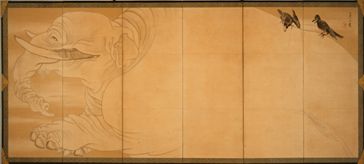
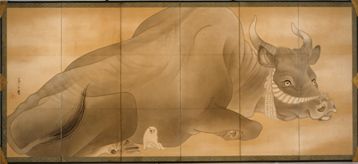
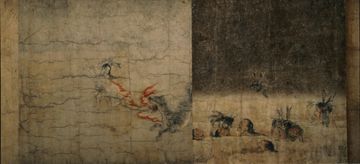
 |
© 2001 ATOMIC BOMB CINEMA LTD. | |