 |
|
 |
| The design of this ranma is deceptively abstract.
Carefully examine the upper, left-hand corner of the ranma.
|
||
| |
||
|
||
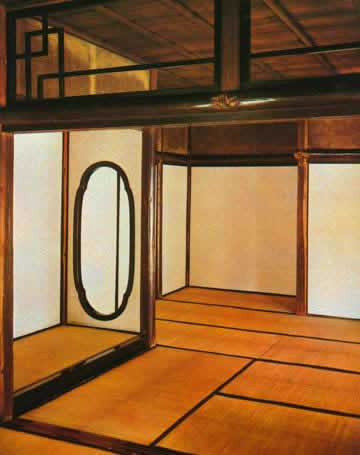
| RANMA Second Room of the New Goten hall, Katsura Imperial Villa Kyoto, Japan 17th century |
||
 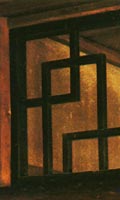 One
interpretation of this pattern of interconnecting wood is that it
is the Indian swastika symbol, (which predates the Nazi's use of the
symbol).  A
more plausible interpretation is that it is the Chinese ideographic
character (or kanji) for "moon,"
or tsuki. This latter interpretation makes more sense because this room was, and is, used for the fall moon viewing festival. There is, of course, room for both interpretations, and others. |
||
 |
© 2001 ATOMIC BOMB CINEMA LTD. | |